
What is an Environmental Product Declaration (EPD)
Sustainability in construction is increasingly moving away from broad environmental claims and towards measurable, transparent data. Architects, developers, engineers and contractors are being asked to consider not only how a building will perform once completed, but also the environmental impact of the materials used to construct it. One of the tools helping project teams make more informed decisions is the Environmental Product Declaration (EPD). But what exactly is an EPD? What information does it provide, and how can it help when selecting façade materials?
What is an Environmental Product Declaration?
An Environmental Product Declaration, or EPD, is a standardised document that provides transparent information about the environmental impacts of a product throughout defined stages of its lifecycle. The information contained within an EPD is based on a Life Cycle Assessment (LCA) and is prepared in accordance with recognised international standards. Depending on the scope of the declaration, this can consider stages such as:
- Raw material extraction and processing
- Manufacturing
- Transportation
- Construction and installation
- Product use and maintenance
- End-of-life processes
- Recycling or reuse potential
Rather than simply describing a product as “sustainable” or “environmentally friendly”, an EPD provides measurable data that project teams can use when assessing the environmental impact of different building materials. A useful way to think about an EPD is as an environmental nutrition label for a building product. It provides the information. The project team can then use that information to make decisions appropriate for their particular building.
An EPD Isn’t a Sustainability Badge
This is an important distinction. Having an EPD doesn’t automatically mean one product is more sustainable than another. Instead, an EPD is about transparency. It provides independently verified environmental information using a recognised methodology, allowing architects, sustainability consultants and other members of the project team to make evidence-based decisions. This becomes increasingly important as the construction industry moves away from broad environmental claims and towards measurable outcomes. For manufacturers and suppliers, providing an EPD means being prepared to make the environmental impacts associated with a product visible. For specifiers, it means having better information available when making material selections.
What Does an EPD Measure?
One of the key environmental indicators reported within an EPD is Global Warming Potential (GWP), commonly expressed as kilograms of carbon dioxide equivalent (kg CO₂e). However, EPDs can report considerably more than carbon emissions. Depending on the applicable standard and declaration, they can provide information relating to areas such as resource use, energy consumption, water use, waste generation and other environmental impacts. This gives project teams a much broader understanding of a product than simply looking at its material composition. It also helps introduce another increasingly important consideration into the specification process: embodied carbon.
What is Embodied Carbon?
When discussing the carbon footprint of buildings, operational energy has traditionally received much of the attention. However, a building can have generated a significant amount of carbon before anybody walks through the front door. Embodied carbon generally refers to greenhouse gas emissions associated with materials and construction processes throughout the lifecycle of a building. This can include extracting and processing raw materials, manufacturing building products, transportation, construction, maintenance, replacement and eventually demolition or disposal. Understanding these impacts allows project teams to look beyond operational performance and consider the building more holistically. EPDs provide much of the product-specific data needed to undertake this type of analysis.
Why Are EPDs Important for Façade Products?
A façade is one of the most significant material systems within many commercial and multi-storey buildings. Material choice therefore needs to consider a wide range of factors, including:
- Durability
- Fire performance
- Weather resistance
- Maintenance
- Design life
- Aesthetics
- Buildability
- Compliance
- Environmental impact
Traditionally, environmental impact could be one of the more difficult factors to quantify. An EPD helps change that by providing documented environmental data alongside the technical information already considered during specification. This doesn’t mean environmental data should be viewed in isolation. A good façade specification needs to consider whole-of-life performance. Durability, maintenance requirements, replacement cycles, compliance and expected service life can all influence the overall outcome of a material decision. The EPD simply gives project teams another credible source of information to include in that decision.
How Can EPDs Support Green Star Projects in New Zealand?
Environmental information is also becoming increasingly relevant for projects targeting sustainability certifications such as Green Star, administered in New Zealand by the New Zealand Green Building Council (NZGBC). An EPD should not simply be viewed as a certificate that automatically earns a project Green Star points. Its value is in providing credible environmental data that can be used by sustainability professionals and project teams when undertaking lifecycle assessments and evaluating the environmental impact of materials. For projects pursuing Green Star certification, having product-specific environmental information readily available can make it easier for the project team to understand and document material impacts. The specific contribution will depend on the Green Star tool being used, the project and how the product forms part of the building’s overall sustainability strategy.
Paneltec Façade Products with EPDs
At Paneltec, we believe environmental transparency should sit alongside technical performance, compliance and good façade design. Three of our façade products currently have Environmental Product Declarations available – Induracore G2, Induraplate and Genesis
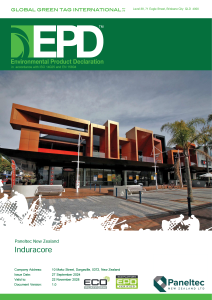
Induracore G2 is a 4mm, three-layer aluminium laminated panel (ALP) featuring a pressed aluminium core. It provides a lightweight façade solution suitable for projects ranging from high-end residential through to high-rise construction. Its EPD provides project teams with documented environmental information that can be considered alongside InduraCore G2’s technical, fire and compliance documentation. Learn more about Induracore G2 and access its technical and environmental documentation.
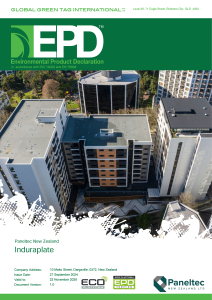
Induraplate is a 3mm solid aluminium façade panel designed for applications where durability, non-combustibility and impact resistance are important considerations. Its Environmental Product Declaration provides lifecycle environmental information that can assist architects and sustainability consultants when evaluating façade material options. Explore Induraplate and view the available EPD and technical documentation.
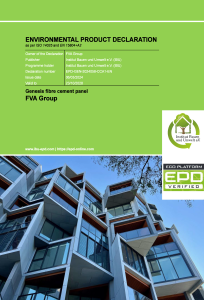
Genesis provides a different material option for façade design. It is a pre-finished compressed fibre cement façade system with a through-colour finish, providing architects with a distinctive alternative to aluminium façade materials. Genesis also has an Environmental Product Declaration available, allowing its environmental impacts to be considered as part of wider material and lifecycle assessments. Discover Genesis and access its environmental and technical documentation.
Better Information Leads to Better Decisions
There is rarely one material that is right for every building. Different projects have different requirements around architecture, location, fire performance, durability, budget, maintenance, program and environmental objectives. That’s why we believe the role of an EPD isn’t to tell an architect what to specify. Its role is to provide reliable environmental information so the project team can make a more informed decision. As New Zealand’s construction industry continues to focus on embodied carbon and whole-of-life building performance, access to transparent product information will become increasingly important. For Paneltec, providing EPDs for Induracore G2, Induraplate and Genesis is part of making that information readily available to the architects, engineers, sustainability consultants, contractors and developers working with our façade systems.
Need Environmental or Technical Information for Your Project?
If you’re considering Induracore G2, Induraplate or Genesis for an upcoming project, our team can provide the relevant EPDs, technical documentation, specifications and façade design support to help during the early design and specification process.
Contact the Paneltec team to discuss your project or visit our Technical Resources to access available documentation.
Order Free Samples
Experience and experiment with any of our products first hand in the profile, colour and finish of your choice.
Technical Documentation
View and download product manuals, CAD files, safety data sheets, warranty details, maintenance information and more.